


The most satisfying bet I have ever had landed at 80/1. Not because of the money — though that mattered — but because the analytical case for it was built entirely from SG data and course history, with no narrative or sentiment involved. The player was being ignored by the market because of three consecutive missed cuts at PGA Tour events; the market had not noticed that all three of those missed cuts came at putting-premium courses where the player’s SG:T2G was actually solid. At a links venue where approach play dominated, they were the highest-ranked European in the field on ball-striking metrics and priced at 80/1. The Open Championship produced exactly the result the data suggested was possible. That is what longshot value looks like: not hope, but a probability estimate substantially higher than what the market implies.
The Statistics Behind Golf Longshot Frequency
Golf produces longshot winners more consistently than almost any other sport. The data from The Open Championship is the clearest illustration: five of the last six winners started at odds of 20/1 or longer. Two of those five winners were priced at 80/1 or more at the start of the week. The Open is the most extreme example because of its links setup and high outcome variance, but the pattern extends across golf generally — outright markets at full PGA Tour events regularly produce winners from 40/1 or beyond on months where no single player dominates.
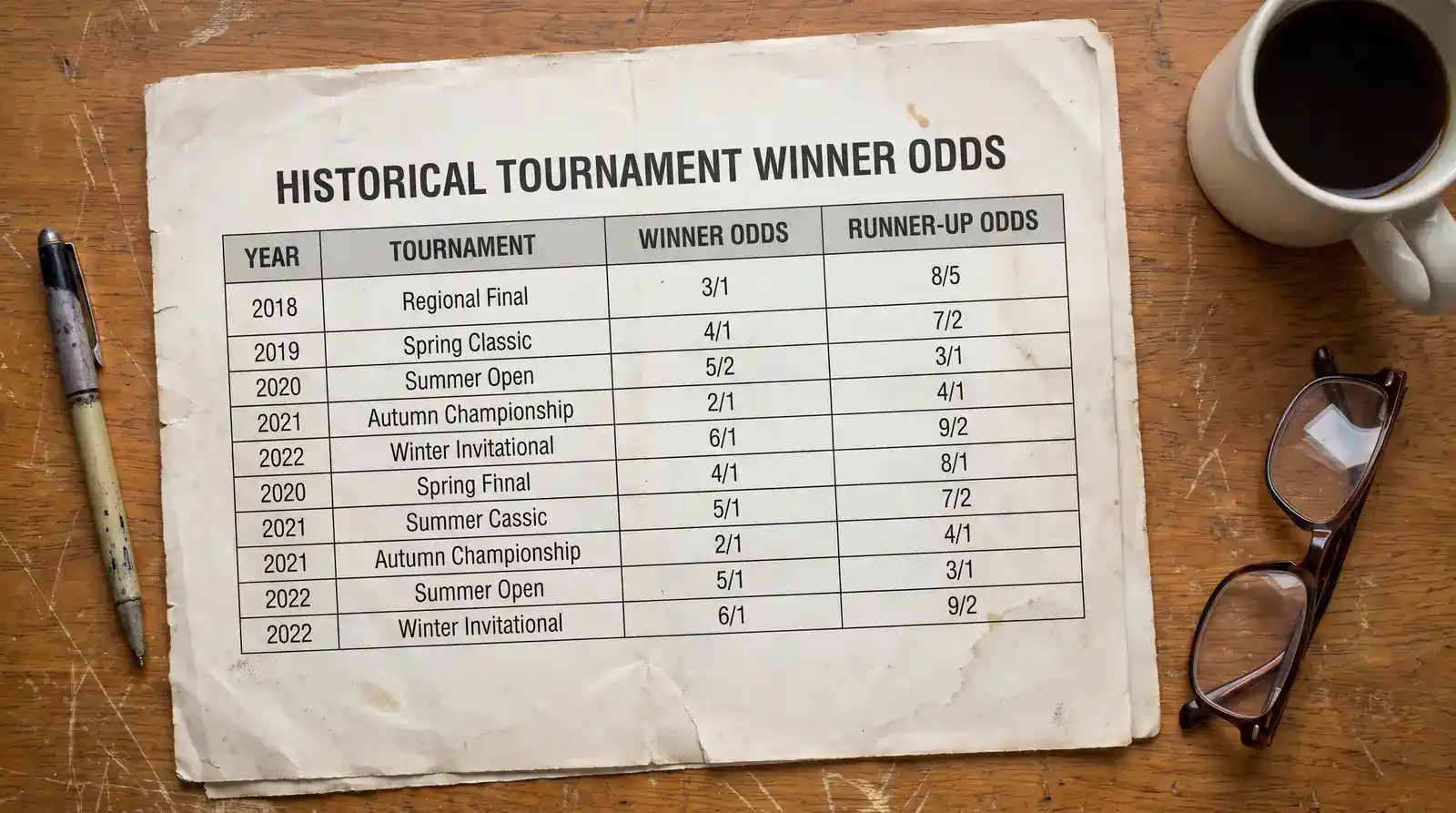
The structural reason is simple: golf is scored individually against the course, not against a single opponent. A 156-player field contains 156 chances for the result to land somewhere unexpected. The best player in the field wins a full-field PGA Tour event only a fraction of the time even when they are hitting the ball significantly better than average. A player averaging +3 SG per round wins roughly 55% of the time when they perform at that level — which still leaves 45% of the time for someone else to win, including players at considerably longer prices who happened to peak at the right moment.

SG-Based Longshot Filter
The discipline in longshot betting is the filter that separates value bets from hope bets. My longshot filter has four criteria applied in sequence. First, the player must be in the top 30% of the field on SG:T2G over their last 8 to 12 events — no longshot bet on a player whose ball-striking is genuinely mediocre relative to the specific field. Second, the course profile must match the player’s SG strengths: an approach-play specialist at a precision venue is a more reliable longshot candidate than a distance player at the same venue. Third, the player must have a positive track record at this specific venue or a closely comparable course type — historical course performance is a better predictor than general world ranking for specific venue bets. Fourth, the player must be priced at 25/1 or longer — if the market has already reflected my analytical case in their price, the value is gone.
The DataGolf Expected Wins framework provides a useful calibration check. A player averaging +3 SG per round in a full-field PGA Tour event wins roughly 55% of the time when they hit that level — so a player averaging +1.5 SG might win 10-15% of the time when they hit that level. If the market prices them at 2% implied probability (50/1), the gap represents genuine longshot value. The filter is ensuring that the player’s underlying performance data is consistent with a 10-15% win probability, rather than backing their reputation or narrative at a price that sounds long but is not.

Which Fields Favour Longshots
Not all fields are equally hospitable to longshot outcomes. The fields that produce the most longshot winners share a common characteristic: high variance in the scoring environment. Links setups, as discussed, produce the most variance because weather and course conditions can change dramatically between waves and rounds. Parkland courses with significant rough and firm greens also produce higher variance because the penalty for missed fairways and greens is severe and randomly distributed. Courses where the scoring is entirely dependent on putting performance also produce variance, because putting is the least consistent SG category week to week.
By contrast, resort-style PGA Tour courses with wide fairways, minimal rough, and soft receptive greens consistently produce low variance: the best ball-striker in the field dominates, winning margins are large, and longshot winners are rare. For longshot betting, avoiding these venues and concentrating on high-variance setups is a structural portfolio decision that improves expected returns on the longshot strategy without changing the per-bet analytical process.

Major Championships are the optimal longshot betting environment because they combine high variance setups (the US Open’s tight setup, Augusta’s architecture-driven outcomes, The Open’s links exposure) with the most generous each-way terms available from UK bookmakers. The combination of longshot-friendly variance and 10-place, 1/5 each-way terms for the top operators creates the maximum return environment for a well-researched longshot selection.
Stake Sizing for a Longshot Strategy
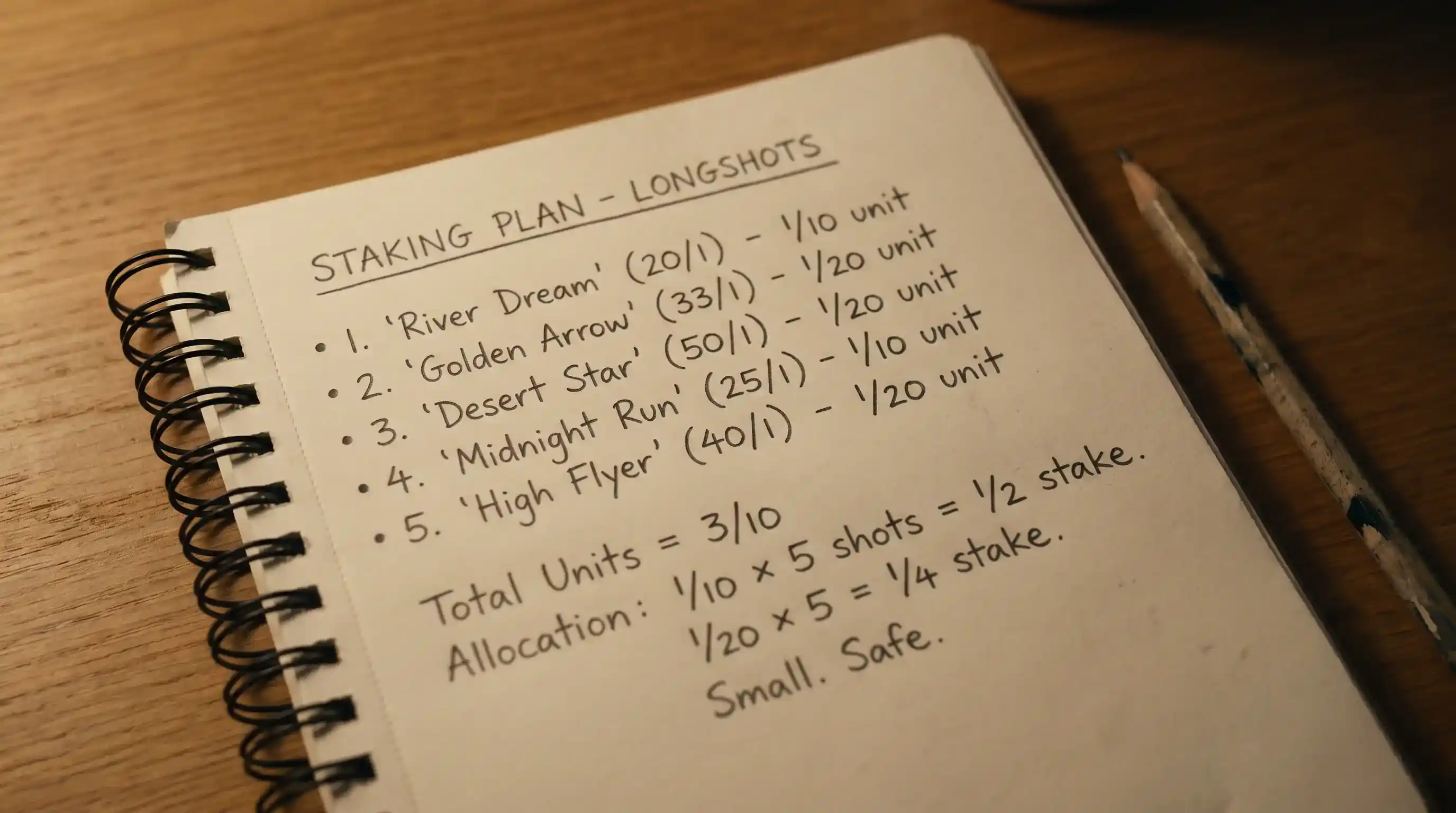
A longshot strategy requires specific stake management discipline because the win rate is inherently low and the drawdown periods are long. If you are backing players at 40/1 and above each week, you should expect to go 15 to 20 bets between winners at a typical 10% hit rate. That run does not mean the system is broken; it is the normal distribution of outcomes at that odds level. But it means the stakes must be sized to survive the drawdown without forcing you to abandon the system.
My approach is to cap longshot stakes at 1 unit regardless of how strong the analytical case is — and for genuinely speculative longer-priced each-way selections above 50/1, half a unit. The reason is not timidity; it is volatility management. A system that bets 1 unit on each of 20 losers at 40/1 loses 20 units. The same system at 3 units per selection loses 60 units in the same run — a drawdown that is psychologically and financially difficult to absorb while maintaining confidence in the process. Consistent small stakes survive variance; aggressive stakes amplify it into existential pressure on your system discipline.
For the full each-way terms analysis and how to maximise each-way returns on longshot selections across different events, the each-way golf betting guide covers place terms comparison, odds calculations, and which operators consistently offer the best value on longer-priced each-way bets.
What SG profile should a longshot candidate have before a Major?
A longshot candidate for a Major should have SG:T2G ranking in the top 25% of the entering field over recent events, with course history at the specific venue or a closely comparable venue type showing above-average performance relative to their world ranking. For links Majors, trajectory control and wind management are critical — players with high SG:T2G driven by distance rather than precision approach shots are less reliable links longshot candidates. The player should also be rested rather than fatigued, as Major Championship final rounds test mental endurance in ways that accumulate over a heavy season schedule.
Is it better to back longshots each-way or straight win at very high prices?
At prices above 50/1, the each-way bet almost always produces better expected value than a straight win bet, particularly when 10-place Major terms are available. The place portion on a 50/1 each-way at 1/5 odds pays 10/1 if the player finishes inside the top 10 — a significantly more achievable outcome than winning outright. At shorter longshot prices (20/1 to 50/1), the analysis depends on the specific each-way terms and the true probability of the player finishing in the places versus winning. As a general rule, back each-way when the place probability is meaningfully higher than the implied place probability from the bookmaker"s terms.
This material was created by SwingEdge team.
