

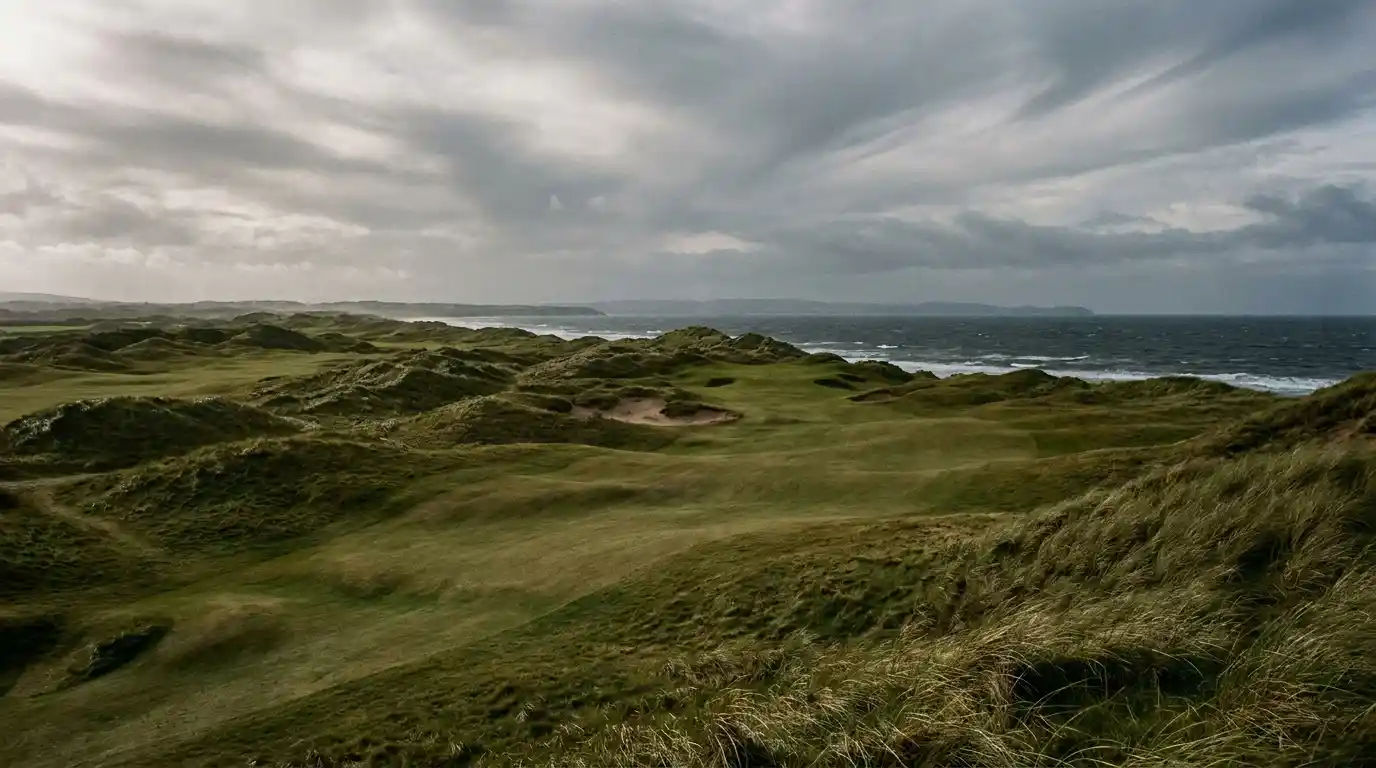
There is no other Major I look forward to betting on more than The Open. That is not sentiment talking — it is nine years of tracking outcomes and noticing a structural feature that no other tournament replicates: the winners come from everywhere. Five of the last six Open Championship victors had opening odds of 20/1 or longer. Two of those five started at 80/1 or longer. No other Major produces winners from that far down the market with such consistency. The question is not whether to look for longshot value at The Open — it is how to identify which longshots are genuine contenders rather than wishful thinking.
The Variance Data That Makes The Open Different
Links golf has the highest outcome variance of any Major format. Wind, weather, bounce, and running ground conditions create a scoring environment that is genuinely unpredictable in ways that Augusta National, a TPC Sawgrass, or a Valhalla simply are not. At Augusta, the architecture rewards specific ball-flight shapes and specific short-game patterns; the same players tend to contend. At The Open on a links rota venue — St Andrews, Royal Troon, Carnoustie, Royal Birkdale — a sudden shift in wind direction can flip the entire leaderboard between morning and afternoon waves, regardless of world ranking.
The combination of an oversized field, 72-hole duration, and genuinely unpredictable conditions produces a tournament where the favourite has won less frequently than at any other Major over the past decade. This is not random variance that defies analysis; it is systematic variance that a prepared punter can exploit by understanding which player attributes translate to links conditions and which do not.


Links Course Requirements: What Actually Transfers
The key insight from SG data across Open Championship rota venues is that Tee-to-Green performance remains predictive, but the specific sub-components shift. Distance off the tee is less of an advantage than on a typical PGA Tour parkland setup — running ground reduces the penalty for shorter hitters, and the premium is on accuracy and trajectory control rather than raw power. Players who shape the ball both ways and can flight it low are structurally advantaged when the wind arrives.
Course history is more predictive at The Open than at almost any other Major, precisely because the skills required are so specific. Players who have competed well at Carnoustie tend to compete well at other British links venues, even when the layouts differ significantly. The common thread is adaptability — managing bump-and-run, playing from unpredictable lies in the rough, and staying patient when conditions tighten scoring for everyone. Looking at a player’s record at links venues specifically, rather than their general form, is a better filter for Open Championship selection than recent worldwide performance.
The 2019 to 2024 Scottish Open data is instructive here. Every winner in that window ranked inside the top four in Strokes Gained: Tee-to-Green for the week — a result that holds even on a links setup. Approach-play excellence transfers to links conditions; you simply need a player who can also manage trajectory and flight in a way that is less critical on most PGA Tour setups.
Each-Way Terms at The Open Championship
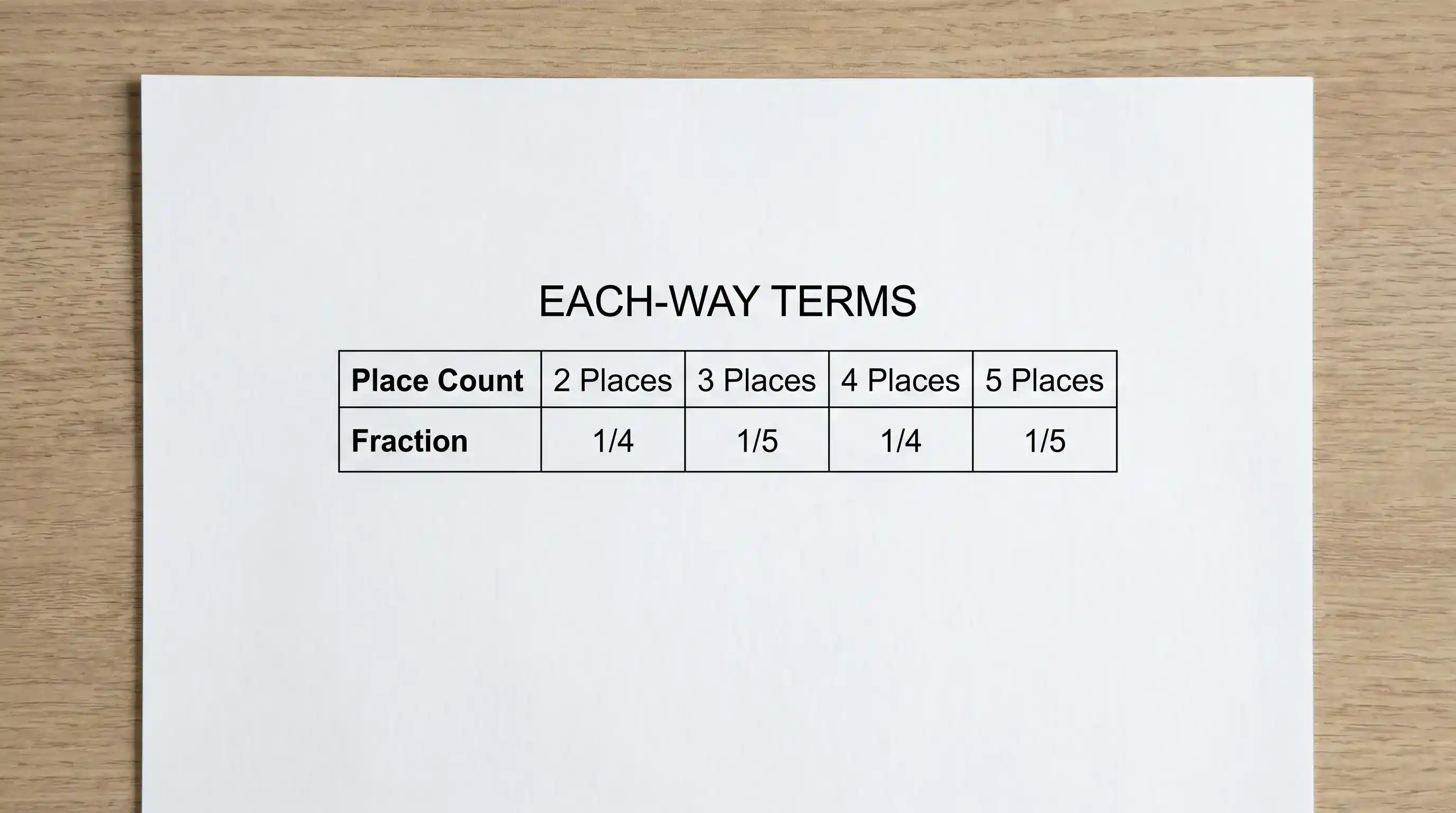
The Open is one of the events where UK bookmakers consistently offer their most generous each-way terms. The standard market benchmark for Majors in 2025 saw several operators — including Betfred, BoyleSports, Coral, and Ladbrokes — offering 10 places at 1/5 odds. That is a dramatically better return on the place portion than the standard five-place, quarter-odds market that applies to most regular tour events.
Ten-place terms at a Major changes the betting calculus significantly. A player at 50/1 who finishes seventh — a result that would lose under standard terms — returns a meaningful profit under 10-place, 1/5 conditions. Given that The Open produces genuine longshot winners and a wide spread of competitive finishes across the top of the field, the combination of high variance outcomes and generous each-way terms makes it the single best event of the year for each-way strategy on longer-priced selections.
The practical approach: identify three to four genuine links specialists with SG:T2G credentials, price them against the opening market, and take the best available each-way price at 10 places or better. If only standard five-place terms are available from a specific operator, shop to find 10-place coverage elsewhere — the difference in return is too large to ignore at meaningful odds.
Identifying Genuine Links Specialists vs. Links Enthusiasts
The hardest part of Open Championship betting is distinguishing players who genuinely play better on links from players who simply say they enjoy links golf. Every player in the field will talk up their excitement about The Open in media appearances. Almost none of them will admit to being a poor links player. The data cuts through this: look at results specifically at links venues — not just The Open itself, but the Scottish Open at Renaissance Club or Dundonald Links, the Irish Open at Portstewart or Ballyliffin, and any other links venue on the DP World Tour or European calendar.
Players who consistently perform above their world ranking at links venues while underperforming at typical PGA Tour setups represent the clearest value in Open Championship betting. These are the genuine specialists — players whose ball-flight, decision-making under wind, and comfort with bump-and-run approach shots produces a systematic advantage that the market underweights because it is focused on recent PGA Tour form. The inverse is equally valuable: identifying world top-10 players who have poor links records and are priced too short based on their general form alone.
Weather forecasting is a final dimension unique to The Open among the four Majors. A player can be the ideal links type in neutral conditions but not the optimal selection if the specific week’s weather pattern suits a different profile. When sustained rain is forecast — which softens the course and removes the unpredictable bounce that penalises ball-strikers — the advantage shifts toward more typical precision iron players. A dry, windy week brings the genuine links specialists into their element. Checking the extended forecast for the tournament venue as early as Sunday or Monday before the event gives you a meaningful edge in pre-tournament price selection.
For the full framework on how course-specific skills translate across different venue types, the golf course fit betting strategy guide goes deeper into how to profile links vs parkland setups and build a systematic selection process.
Which rota courses have the highest scoring variance at The Open?
Carnoustie and Royal Birkdale have historically produced the highest scoring variance at The Open Championship, driven by their exposure to coastal winds and the severity of their rough when conditions are difficult. St Andrews, by contrast, tends to produce lower variance when the weather is benign — the wide fairways reduce penalty for misdirection, and the scoring tends to compress at the top. Troon and Muirfield sit between these extremes. Identifying the likely weather pattern for the specific year can help narrow down whether the variance will be high or moderate.
How many places are typically offered each-way for The Open Championship?
In 2025, four major UK bookmakers offered 10 places at 1/5 odds for The Open Championship, which is the most generous standard Major each-way terms available in the UK market. Some operators offer enhanced each-way terms through specific promotions or opt-in features that extend beyond 10 places for high-profile events. Checking the best available terms across multiple accounts before placing is always worthwhile for a Major, as the difference between 5-place and 10-place terms on a 50/1 selection is very significant.
This material was created by SwingEdge team.
