


The first time I placed a First Round Leader bet with any genuine analytical backing was at a DP World Tour event where overnight rain had softened the course dramatically. The morning wave starters were attacking every flag; the afternoon drew wind and firm-drying conditions. I had two players I liked in the morning draw — not because they were the best in the field, but because the structural conditions gave them an advantage the market had not fully priced. Both finished inside the top three after 18 holes. That experience cemented the FRL market as a permanent part of my rotation, not because it is easy money, but because it is one of the few markets where a systematic approach to publicly available information consistently produces an edge.
How the FRL Market Works and Where It Sits
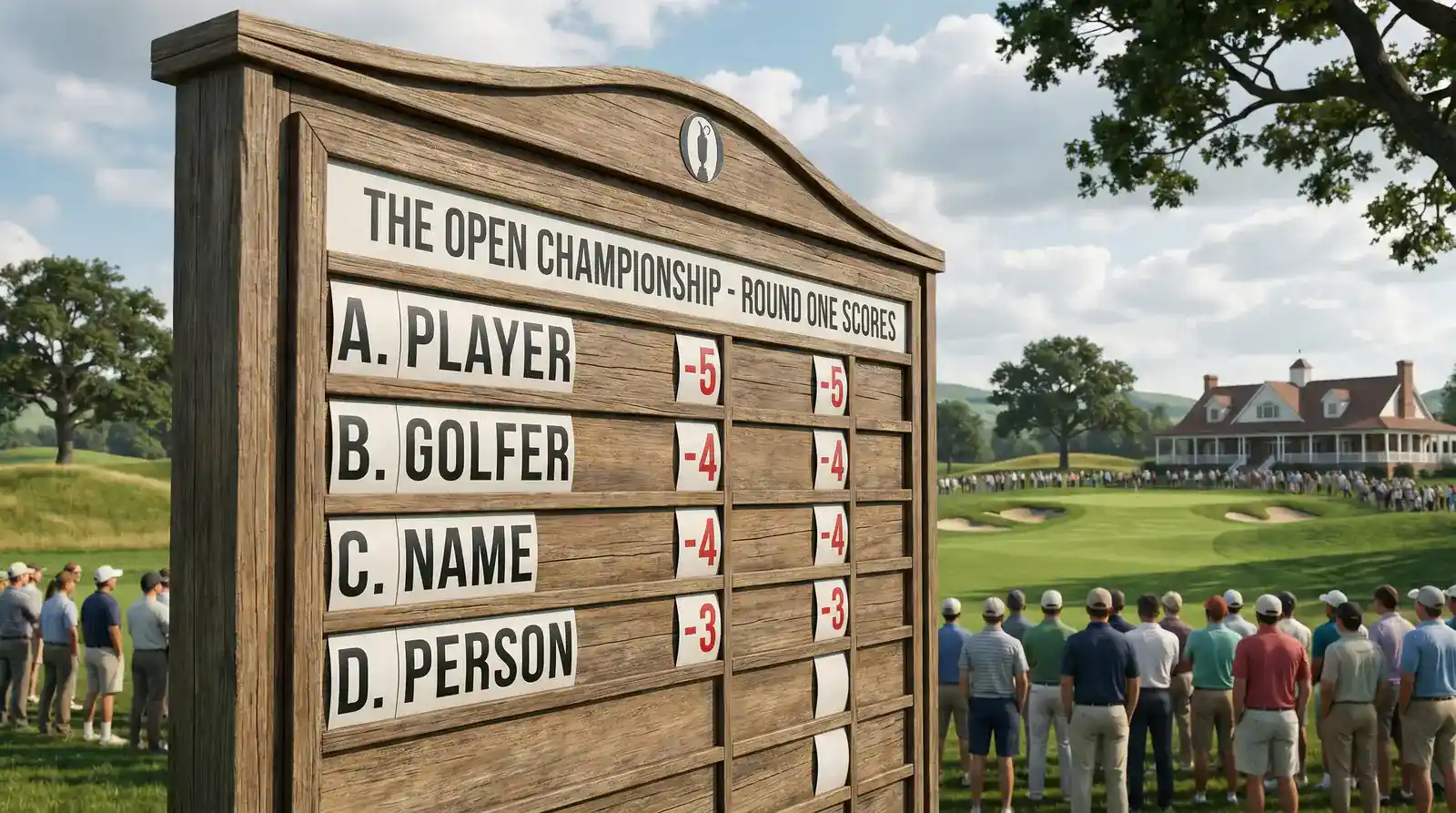
The First Round Leader market asks a simple question: who will have the lowest score after 18 holes? Settlement is based on the outright first-round leader, and in the case of joint leaders, most UK bookmakers use dead-heat rules — dividing the payout by the number of co-leaders. This settlement mechanic matters when you are sizing bets, because a dead heat effectively halves your return, and in good scoring conditions you can easily have three or four players tied at the top after round one.
The FRL market typically offers far more generous odds than the tournament outright, for an obvious reason: the market is isolating just 18 holes rather than 72. A player who is not a genuine contender over four rounds might be a legitimate first-round threat if they have form in benign conditions, a favourable wave draw, and a hot recent putting week. The trade-off is that you are betting on a much higher-variance outcome — the first-round leader finishes in the top 10 overall far less than half the time.
Wave Analysis: The Core of the FRL Edge
Wave draw is the structural advantage that the FRL market most consistently misprices. When a tournament site plays significantly differently between morning and afternoon — softer course in the AM, firmer and windier in the PM, or vice versa — the scoring conditions create a systematic edge for one wave over the other. Bookmakers price FRL markets off a blend of world ranking, recent form, and broad odds positioning, and they rarely adjust quickly enough for concrete wave advantages that only become clear the night before or morning of round one.

My approach is to watch scoring conditions from the moment draw is released. I check weather forecasts for the tournament location across the full tee time window, and I note how the course is set up — is it coming off rain or dry? Is wind forecast to build through the day? At courses where morning conditions have historically averaged two or more shots better than the afternoon wave, the structural edge is meaningful enough to bet. Real-time data on greens speed, pin positions, and conditions before the first tee time drops is where the advantage lives.

The birdie rate per hole is another live signal, though it requires in-play data access. Once the morning wave is underway, the scoring rate against par tells you whether conditions are as favourable as expected — and it can sharpen a pre-round FRL assessment or suggest a wave advantage was overstated.
Strokes Gained Filters for FRL Selection
Once the wave is determined, player selection within that wave uses a condensed version of my standard SG framework. For a one-round market, I weight Strokes Gained: Tee-to-Green heavily but also give more attention to recent putting performance than I would in a tournament outright context. Over 72 holes, putting variance smooths out; over 18 holes, a player who is genuinely hot with the flat stick can carry a round that their ball striking alone would not produce.
The SG:T2G data confirms a consistent pattern across PGA Tour events: players finishing in the top four on Strokes Gained metrics for the week tend to appear at the top of the first-round leaderboard disproportionately often. Six consecutive Scottish Open winners between 2019 and 2024 came from the top four SG:T2G performers that week — a pattern that extends to first-round performance as well. Players who ball-strike at the top of the field do not suddenly forget how to do so after 18 holes.

For building a shortlist: I take the morning wave, filter to players with SG:T2G in the top 20% of the field over the past six events, cross-reference with course history if the venue has data going back four or more years, and eliminate anyone who has shown signs of fatigue from back-to-back weeks. That usually leaves three or four names. From those, the best price relative to my probability estimate is the bet.
Managing Dead-Heat Risk in FRL Selections
Dead-heat rules are the FRL market’s most significant structural quirk, and they require explicit management in how you size FRL bets. In scoring-friendly conditions — soft course, benign wind, gettable pins — it is entirely normal for three, four, or five players to share the lead after 18 holes at the same score. If you back one of those players at 40/1 and five players finish at -7, you receive one-fifth of the normal payout: 8/1 rather than 40/1. That is a dramatic reduction, and it changes the bet’s expected value significantly.
My approach is to adjust my probability estimate downward by 15-20% in scoring-friendly conditions to account for dead-heat risk. In tight, difficult conditions where scoring is compressed and a single player finishing at -4 is likely to lead outright, dead-heat risk is much lower, and the FRL market offers its clearest value. Targeting FRL bets in conditions where scoring is harder — firm, windy, tight pin positions — reduces dead-heat exposure and keeps the market in territory where a single player’s round-long SG advantage is more likely to produce an outright lead.

The detailed statistical methodology behind SG-based selection is covered in the strokes gained golf betting guide, which goes deeper into SG categories and how to weight them for different market types.
How far in advance are tee time draws typically released for PGA Tour events?
PGA Tour tee time draws are typically released around 48 hours before the first round — usually on Tuesday afternoon US time for a Thursday start. For DP World Tour events the window is similar, though smaller events may release draws closer to 36 hours out. The FRL market on most UK bookmakers opens once pairings are confirmed. Setting an alert for the draw release is the most efficient way to access the best early prices before sharp money adjusts the market.
Does the FRL market pay out if there are multiple joint leaders?
Yes, but with dead-heat rules applied. If two or more players share the first-round lead, the payout is divided by the number of co-leaders. So if you backed a player at 40/1 and three players finish tied at the top, you receive one-third of the normal payout. This significantly affects the value of FRL bets in scoring-friendly conditions where multiple low scores are likely, because dead heats reduce returns without reducing the risk of loss.
This material was created by SwingEdge team.
