

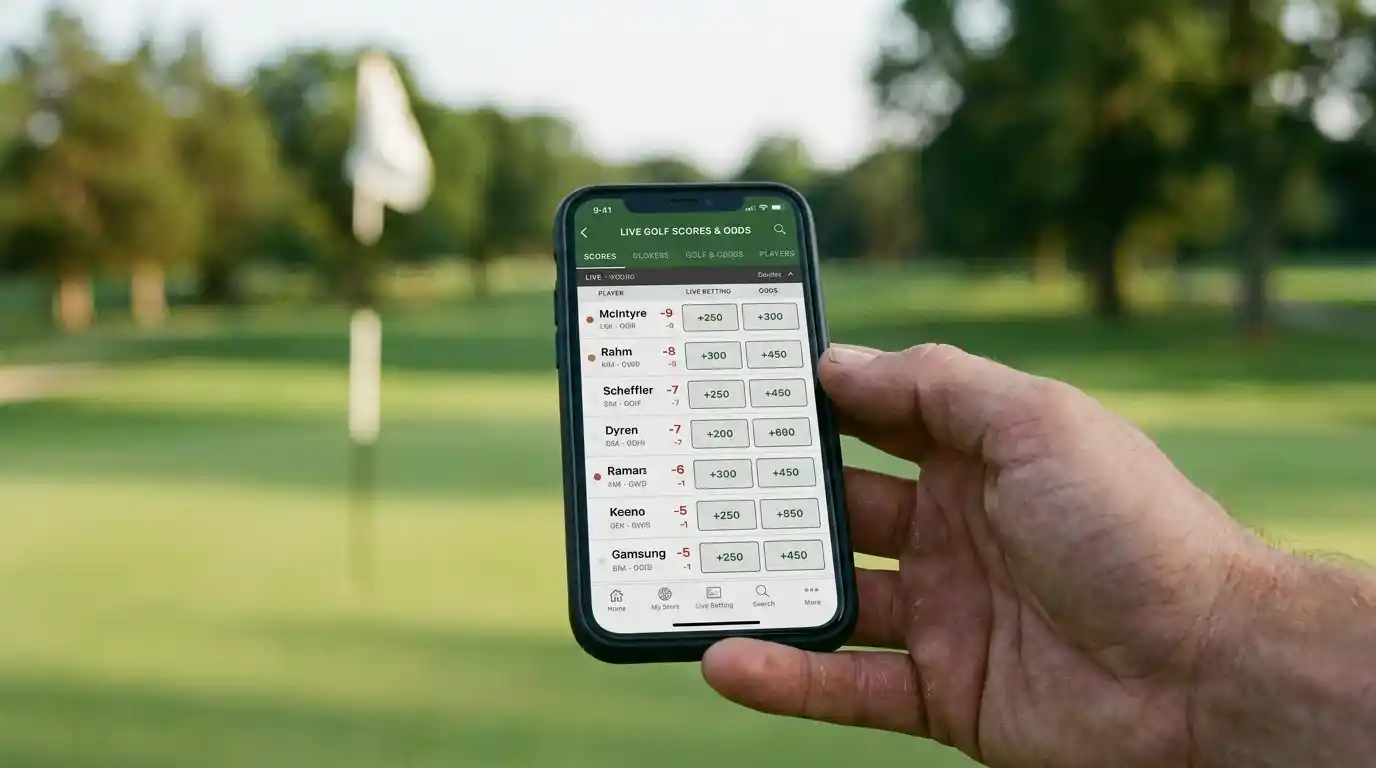
Nine years of betting on golf, and the single biggest shift I have witnessed in how the markets work happened in 2024. Real-time data became genuinely integrated into live golf odds — not just score-based adjustments, but live feeds that factor in distance, approach proximity, shot-level data, weather changes, and momentum across the field. The result is a live betting environment that is simultaneously harder to beat and more opportunity-rich than anything that existed before. Harder because the books are sharper. Richer because the market still lags real-time information by five to fifteen minutes in ways a prepared punter can exploit.
How Live Golf Betting Has Evolved
Before 2024, in-play golf odds were updated primarily on score — a birdie pushed prices, a bogey lengthened them, and the adjustments were blunt. The books were not accounting for whether a player was making birdies from eight feet or from tap-ins. They were not watching approach shot proximity or tracking whether a player was taking dead aim or laying up on par-fives. That has changed. Modern live golf platforms use shot-level data feeds — the same underlying data that ShotLink provides to the PGA Tour — to update probabilities round by round, hole by hole, and increasingly shot by shot.
Bettors can now adjust their positions based on weather shifts, momentum swings, and even a player’s body language mid-round, as one industry analysis noted — though “body language” is a stretch of the actual capability. What is genuinely trackable in real time is scoring conditions by hole, approach proximity, birdie conversion rates, and the spread of scores across the field. These are the inputs that produce mid-round value.
The Birdie Rate Signal and How to Use It
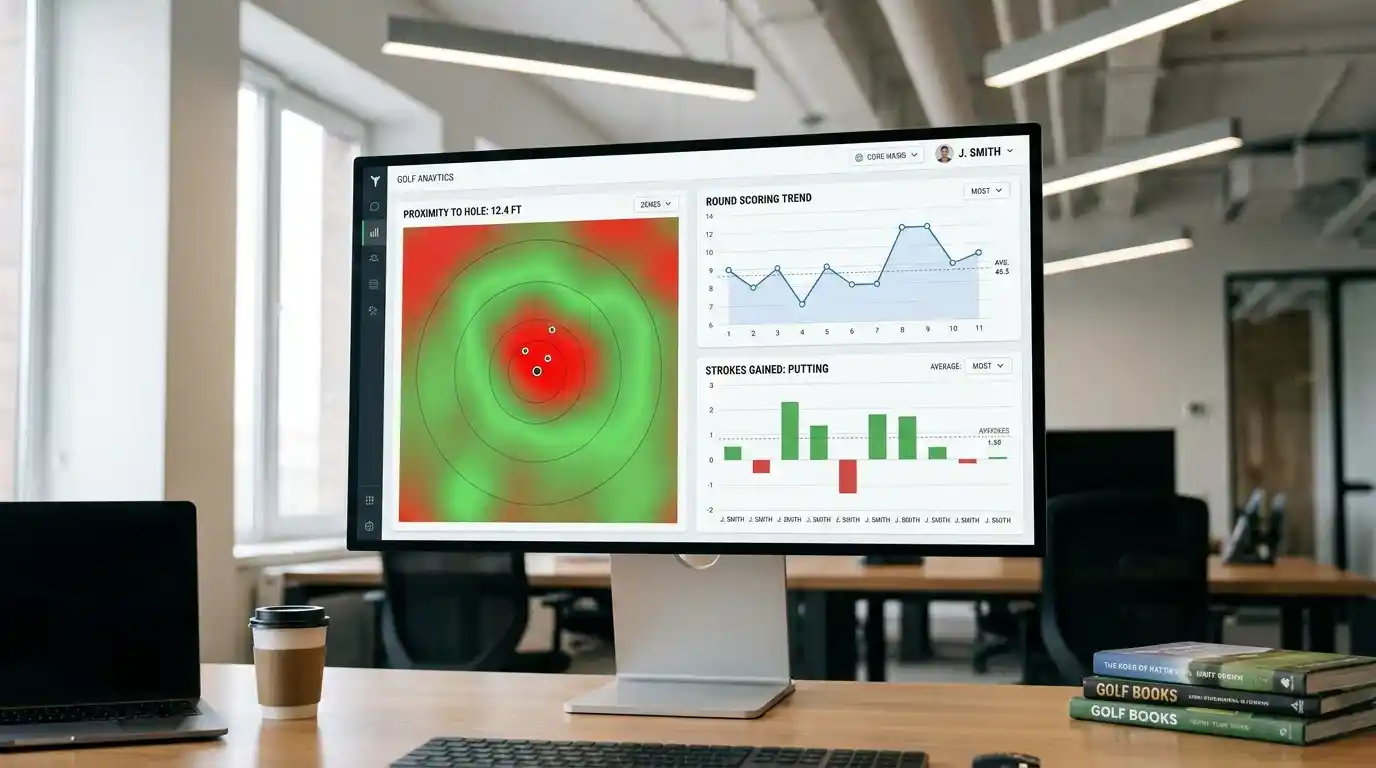
The birdie rate per hole is the live statistic I monitor most closely during in-play betting. When a specific hole is playing significantly easier than its par suggests — greens holding, pin accessible, course soft — the birdie rate in the morning wave gives you a read on whether that pattern will persist for afternoon starters. A player about to play a par-5 that has produced a 65% birdie rate in the morning wave is in a very different position to the same player facing a hole that has yielded a 12% birdie rate.
This is where in-play golf betting rewards preparation over reaction. The punters who profit consistently from live markets are not the ones frantically refreshing the leaderboard and backing whoever just birdied. They are the ones who identified their players before the round, know the holes those players excel at, and have a clear thesis about when mid-round price movement creates a live entry point at better value than was available before the first tee shot.
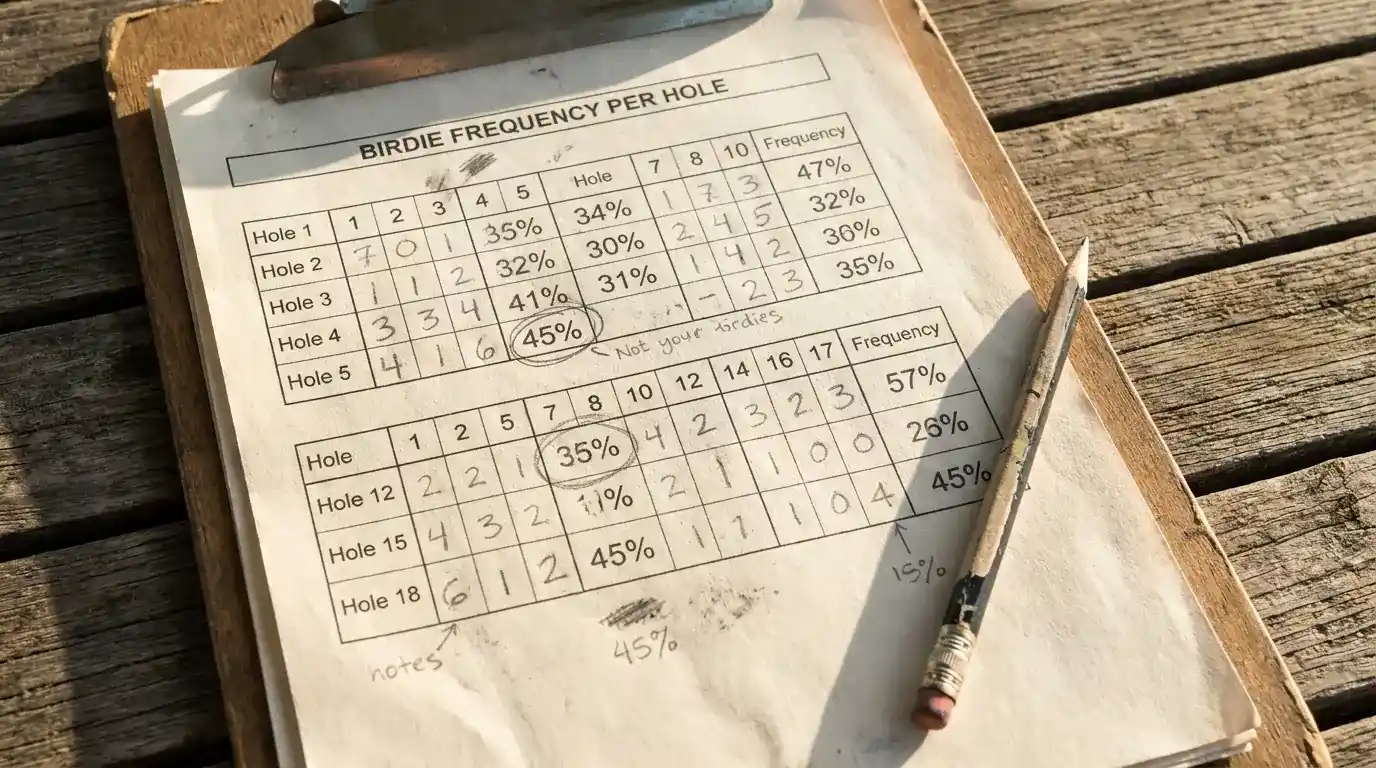
Wyndham Clark’s 20.65% birdie rate on Par 4s in 2024 is the kind of granular data that makes in-play decisions analytically grounded rather than instinct-driven. When a player with that kind of approach-play frequency is heading into a stretch of par-4s on a soft course, live prices that have not yet moved typically represent a betting opportunity — not a guarantee, but a positive-EV entry.
Cash-Out as a Risk Management Tool, Not an Exit Strategy
Cash-out is the most misused feature in live golf betting. The default instinct is to cash out when a player is in contention through round three, locking in a profit and removing the anxiety of Sunday. The mathematical reality is that cash-out almost always pays you less than the fair value of your position — bookmakers build a margin into the cash-out calculation, meaning the price they offer is systematically below the true probability of your bet winning.
The correct use of cash-out is not anxiety management — it is active position management when new information changes your probability estimate. If your selected player has visibly injured themselves, if weather has deteriorated in a way that specifically disadvantages their game, or if they are paired on Sunday with a player who historically drags down their performance in pressure situations, those are genuine reasons to reduce exposure. Cashing out because you are nervous is surrendering edge to the bookmaker.

Partial cash-out is more nuanced. Locking in a portion of a profit while leaving part of the position running can make sense when the market has moved significantly in your favour and you want to reduce variance without eliminating upside entirely. But the same principle applies: do it because the risk/reward calculation has changed, not because Sunday golf is stressful to watch.
Identifying Live Entry Points Before the Round
The most consistent in-play edge is not found mid-round — it is prepared before the first tee shot. My process is to identify two or three players before each round whose pre-round price represents genuine value, and then set a specific in-play trigger: I will back this player if they reach a specific score benchmark on the first nine holes. This discipline prevents reactive betting — backing a player simply because they made three birdies in a row, when the market has already priced in that momentum.
Pre-setting triggers also protects against the natural cognitive bias toward recency. A player who bogeys their first three holes and drops to 50/1 from their 20/1 pre-round price may still be the same quality ball-striker they were on the first tee. If the bogeys came from poor course management or unlucky bounces rather than a structural breakdown in ball-striking, the price movement has created genuine value. Conversely, a player who goes birdie-birdie-birdie on the first three and moves from 40/1 to 15/1 may have exhausted their statistical advantage for the round before you have even had the chance to consider the bet.

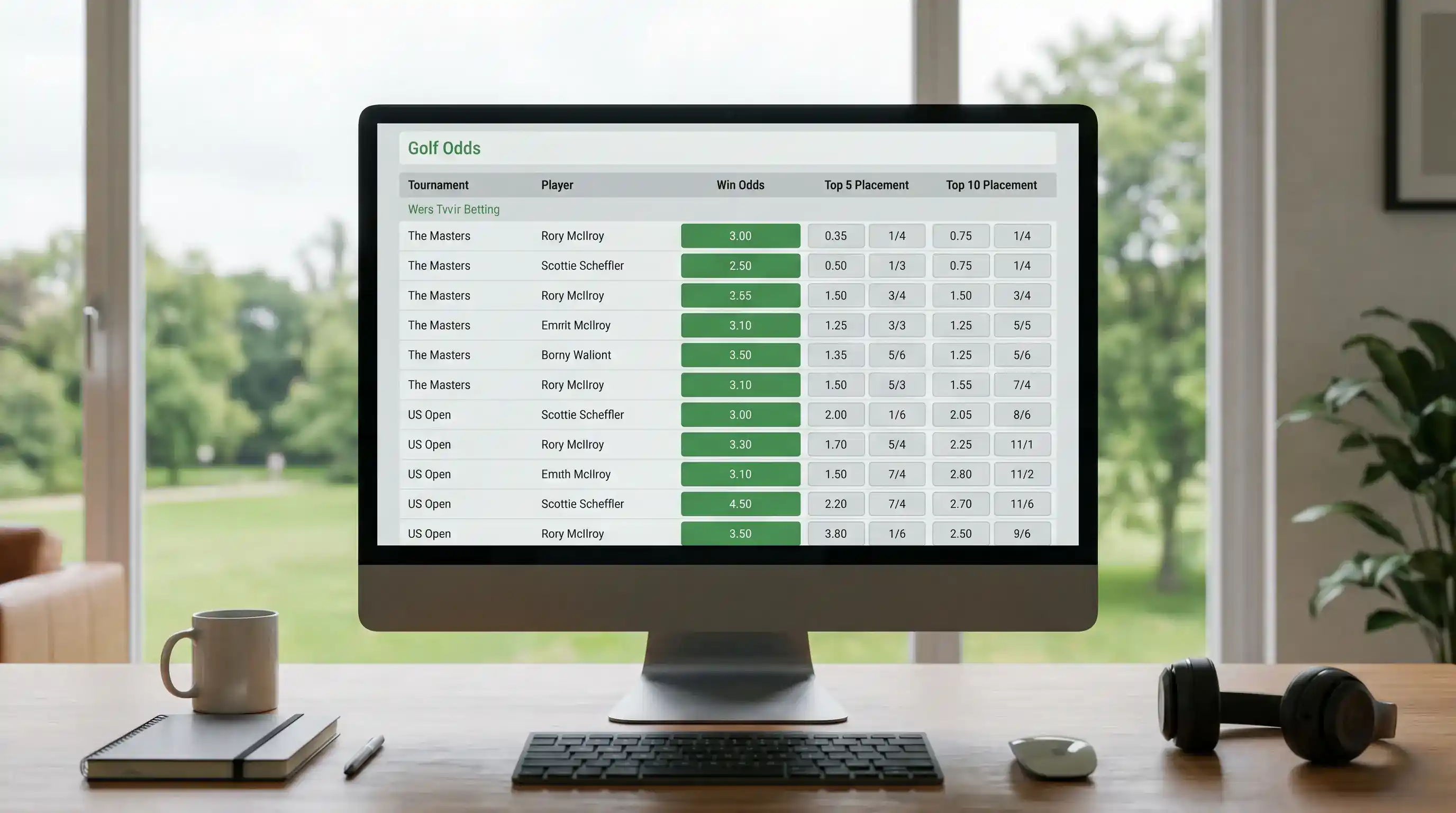
The discipline of pre-round planning extends to knowing which events are worth engaging with live versus which to leave alone. Events with patchy TV coverage, delayed live scoring updates, or limited bookmaker in-play market depth are poor candidates for a systematic in-play approach. The UK market has excellent live coverage of major PGA Tour and DP World Tour events — these are the events where the data feed is real-time and the markets are liquid enough for in-play bets to be placed at useful prices. Smaller tours and developmental events are worth leaving to the outright market.
For the broader framework on which UK bookmakers offer the most comprehensive in-play golf markets and how to evaluate them, the best golf betting sites UK guide covers platform depth and live coverage in detail.
Which bookmakers offer the best in-play golf markets for DP World Tour?
Coverage of in-play DP World Tour markets varies significantly between platforms. The major UK operators generally offer live betting on Rolex Series events, but smaller DP World Tour events may have limited in-play availability. The key features to look for are: live streaming or score integration, quick market suspension and reinstatement between holes, and availability of markets beyond just tournament winner — such as round leader, top-10 finish, and next birdie/bogey markets.
How quickly do bookmakers suspend golf markets mid-round?
Golf in-play markets are suspended frequently — typically between shots and certainly between holes. Most major UK bookmakers suspend markets while a shot is in the air and reinstate them once the result is known. Markets can also be suspended due to darkness stoppages, weather delays, and on the final holes of a close finish. Understanding when and why markets suspend helps you plan entry points — pricing is often most favourable immediately after reinstatement, when the book has not yet fully processed the latest scoring information.
This material was created by SwingEdge team.
