


Writing about responsible gambling in the context of a systematic golf betting guide is something I take seriously — not as a regulatory footnote, but as a genuine operational consideration. The variance in golf betting is extreme: a well-researched each-way selection at 40/1 fails to place eight times out of ten under standard each-way terms. A run of 15 losing bets in a row at a 10% win rate is statistically normal, not a sign that the system is broken. That variance profile creates real pressure on a punter’s decision-making, and pressure is where responsible gambling habits either hold or collapse.
Understanding the PGSI Framework
The Problem Gambling Severity Index is the primary clinical tool for measuring gambling harm in the UK. It uses nine questions about gambling behaviour to produce a score from 0 to 27. A score of 0 indicates non-problem gambling; 1 to 2 is low risk; 3 to 7 is moderate risk; and 8 or above is classified as problem gambling. The Gambling Commission’s Gambling Survey for Great Britain, published in October 2025 covering 2024, found that 2.5% of the UK adult population scored 8 or above — a stable figure year-on-year.
What the PGSI score measures, at its core, is whether gambling is causing problems: financial difficulty, relationship impact, psychological distress, chasing losses, lying about gambling behaviour. These are not theoretical risks for golf bettors — the high variance of the sport makes the temptation to chase a losing run a real and recurring pressure. A punter who maintains a staking plan and a results record is building the structural protection against that pressure. A punter who is betting from feeling rather than process is operating in the risk zone.
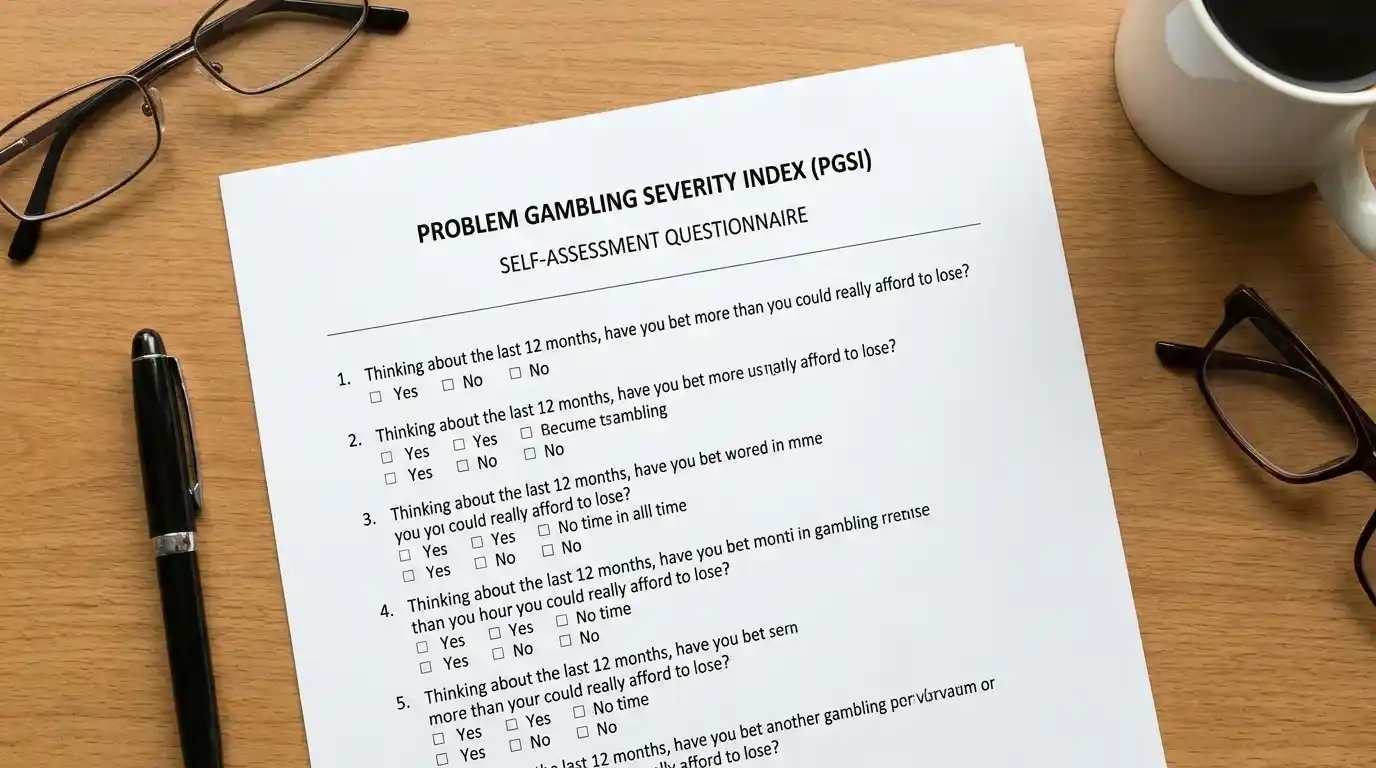
The Gambling Commission’s view of the PGSI is direct: it is a key building block of the evidence base that helps government inform policy and protect consumers. For punters, it is a personal diagnostic tool — the questions are publicly available and worth running through honestly, particularly if you have experienced a difficult run of results or notice your betting decisions becoming more emotionally driven than analytical.
Risk Profiles by Age in UK Golf Betting
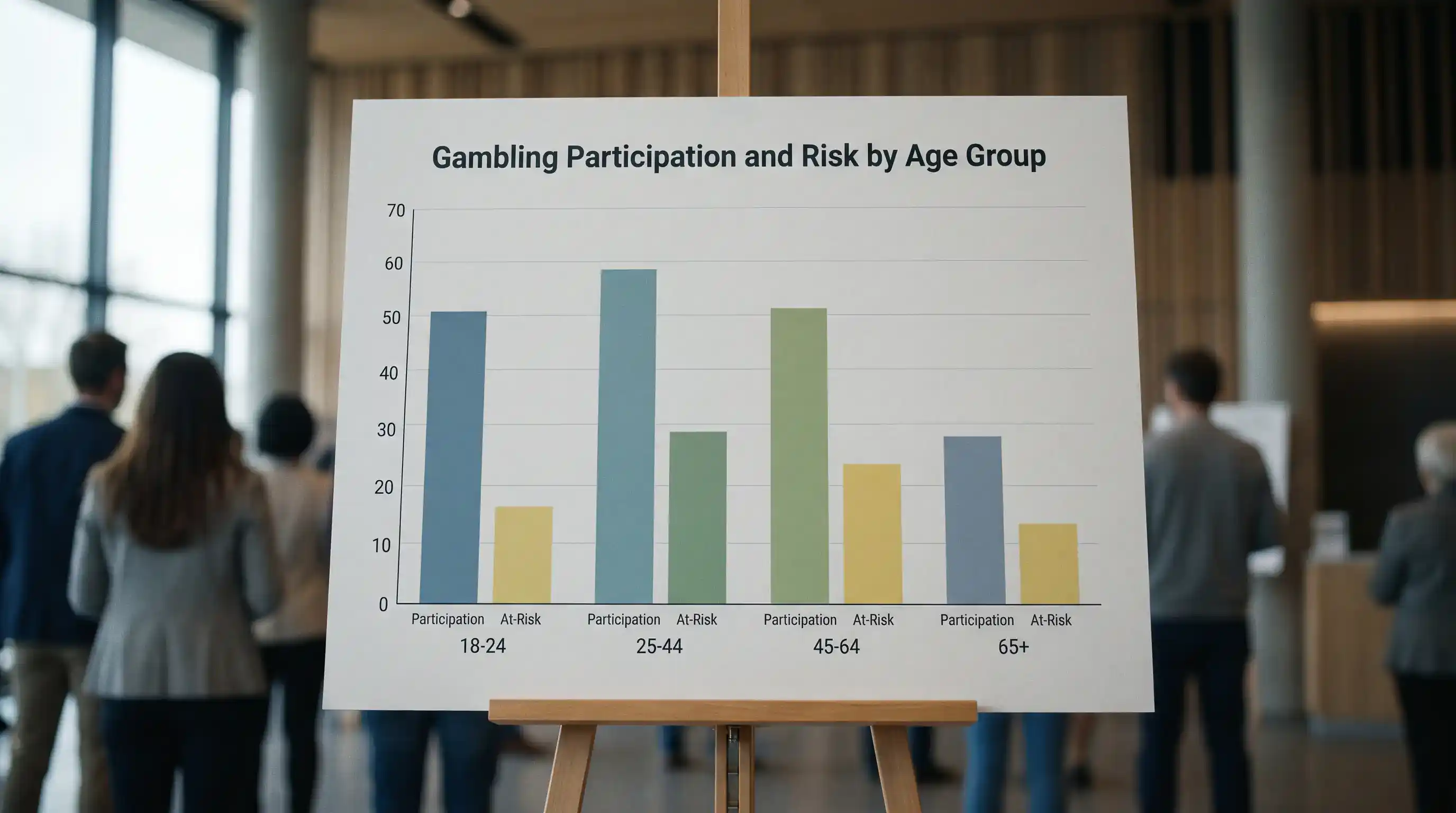
The Gambling Survey for Great Britain found that 21.9% of adults aged 18 to 24 scored above zero on the PGSI in 2024 — the highest rate of any age group. This is not a coincidence: younger bettors have less financial buffer against losses, less experience of multi-month losing runs, and more exposure to the normalisation of gambling through sports media and advertising. Golf betting, which skews older demographically, is not immune from this — younger punters entering the market through social media exposure to golf betting content are in a statistically elevated risk group.
The practical implication for any punter in their early twenties using a systematic golf betting approach: the bankroll and staking discipline I describe is not optional risk management, it is basic self-protection. A 50-unit bankroll with 1-unit stakes means a catastrophic 20-bet losing run reduces your bankroll by 40% — painful, but recoverable. The same punter betting 10% of bank per selection is wiped out by the same run. The maths is protective precisely because it removes the decision-making from the emotional moment.
95% of UK online gambling happens at home, where the absence of social friction means it is entirely normal to place a bet within minutes of feeling the impulse. The mobile environment has made this even more immediate. Recognising that the physical environment of online betting makes impulse control harder than in-person betting is part of operating a disciplined system.
Safer Gambling Tools and How to Use Them
From May 2025, UK operators are required to obtain explicit consent for marketing by product type and channel — which means you can now actively manage the marketing environment you are exposed to. Opting out of casino product marketing while maintaining sports betting communications reduces the overall volume of gambling prompts you receive, which in turn reduces the frequency of impulse betting opportunities.
Deposit limits are the most effective single tool for maintaining bankroll discipline on online accounts. Every UK licensed operator is required to offer them; they are free to set and can be adjusted downward immediately, with upward adjustments subject to a cooling-off period. Setting a monthly deposit limit equal to your maximum planned monthly betting bank at the start of each month is the simplest structural protection against loss-chasing: once the limit is reached, further deposits are prevented regardless of the emotional state you are in when you try to make them.

Self-exclusion through the GamStop national self-exclusion scheme is the most significant tool available for punters who recognise that their relationship with gambling has become harmful. GamStop operates across all UK licensed operators simultaneously — a single registration excludes you from all participating sites for a minimum of six months. It is not a decision to make lightly, but if you recognise that you are making bets for reasons other than analytical edge, it is the right decision to make before the financial or personal consequences become severe.
When Golf Betting’s Variance Becomes a Risk Signal
The specific risk signal I watch for in my own behaviour — and that any systematic golf punter should monitor — is stake escalation during a losing run. Betting 1 unit consistently through 15 losing bets is disciplined variance management. Gradually increasing to 1.5 units because “I’m due a winner” or “I need to recover losses faster” is the textbook loss-chasing behaviour that the PGSI identifies as a moderate-risk indicator. If you notice your stake increasing during a run of poor results, that is the moment to reduce back to your baseline — not to press harder.

Golf’s variance means that a run of 10 or even 15 losing bets at 10% win rate is not statistically improbable; it is an expected feature of the distribution. A punter who internalises that mathematically — who genuinely believes the run is bad luck rather than evidence that their system is broken — is in a much safer mental position than one who interprets normal variance as personal failure requiring correction through bigger stakes or more desperate selections.

For the bankroll and staking framework that provides structural protection against variance-driven decision-making, the golf betting bankroll management guide covers unit sizing, drawdown limits, and the mathematical rationale for consistent staking through variance cycles.
What PGSI score indicates problem gambling and what support is available in the UK?
A PGSI score of 8 or above indicates problem gambling. Support in the UK is available from GamCare (the national helpline and counselling service), BeGambleAware (online resources and referral service), and the National Gambling Helpline. GamStop offers free national self-exclusion across all UK licensed gambling operators. Gambling Commission-funded treatment is available through the NHS and voluntary sector organisations. If you recognise problem gambling behaviour in yourself or someone you know, GamCare"s helpline is the recommended first contact point.
How does GamStop interact with each-way golf bets already placed?
GamStop registration takes effect within 24 hours of registration and applies to all UK licensed gambling operators. Any bets placed before GamStop registration are settled normally according to standard operator terms — GamStop does not retroactively void existing bets or affect pending settlements. Once GamStop is active, you will not be able to log in or place new bets on participating licensed UK sites. The self-exclusion period minimum is six months and can be set to 1, 2, or 5 years, or permanently.
Where can I find the most recent GSGB participation statistics?
The Gambling Survey for Great Britain is published annually by the Gambling Commission and is freely accessible on the Commission"s website. The most recent edition covers 2024 data and was published in October 2025. The survey includes gambling participation rates by sport, age, gender, and geography, as well as PGSI score distributions. Quarterly industry statistics reports, also on the Commission"s website, provide more frequent updates on operator-side GGY data and market size figures.
This material was created by SwingEdge team.
