


I have tried three paid golf tipster services over the years. Two were straightforward failures; one was genuinely useful for about eighteen months before the ROI degraded as the picks became more mainstream. What I learned from all three is that the evaluation process before subscribing is more important than the tips themselves: a service that passes a rigorous pre-subscription evaluation is far less likely to disappoint than one you subscribed to because the sales page had impressive numbers that you did not interrogate properly. The UK golf tipster market in 2026 is more competitive than ever, and the quality range is wide.
The Core Evaluation Criteria for Any Golf Tipster
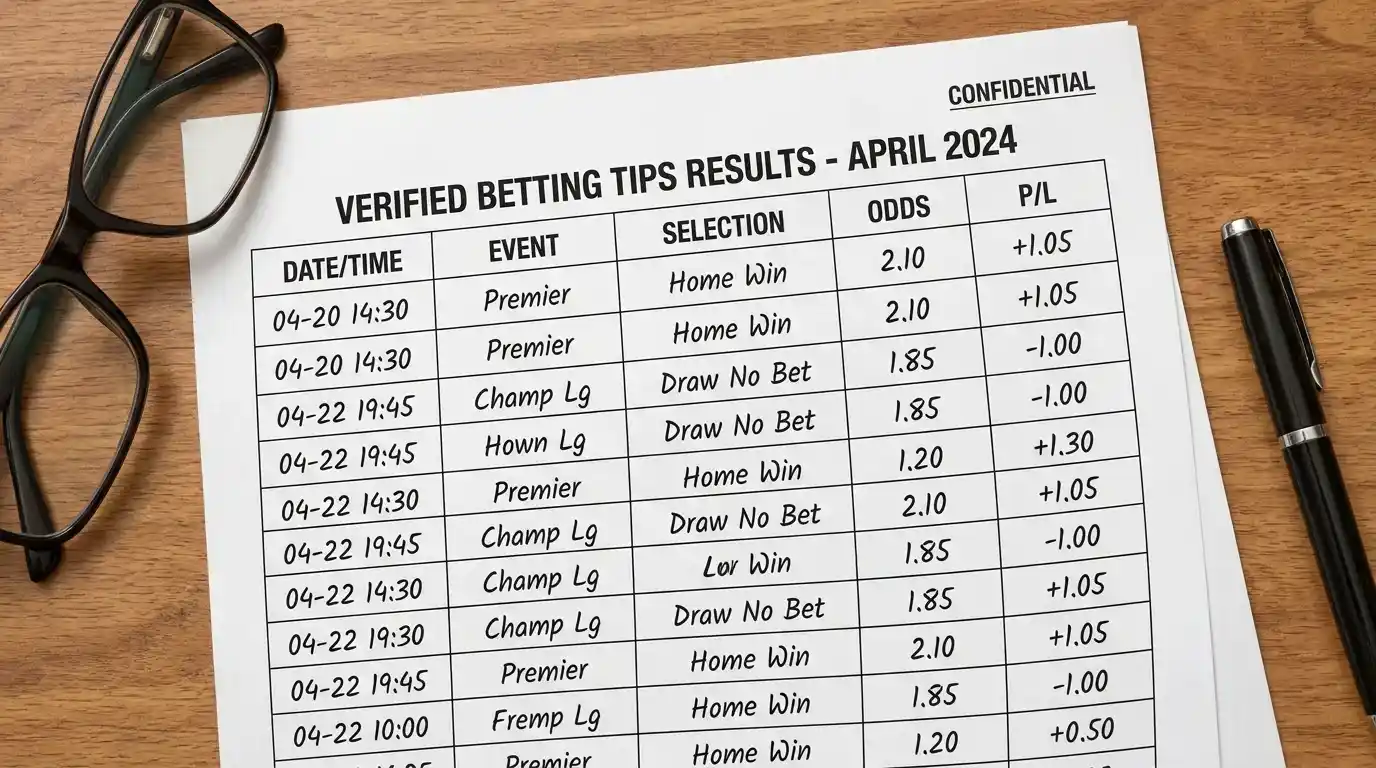
The non-negotiable starting point is a verified, independently proofed record. Any tipster worth considering should have their results submitted to a third-party proofing service — a platform that records tips in real time as they are issued, with timestamps, and settles them against actual market prices. A proofed record means you can verify that results are not being claimed retroactively, that the prices shown are achievable and not theoretical bests, and that the sample is continuous rather than cherry-picked from a successful window.
Without a proofed record, there is no meaningful evaluation to be done. Marketing screenshots, social media highlights of winning tips, and testimonials are all compatible with a service that is fundamentally unprofitable — they simply represent the selection bias of only showing wins. This is not a cynical position; it is a basic evidential requirement. Serious tipsters understand this and submit to proofing voluntarily, because it is the only way to build genuine credibility with analytical punters.

The Gambling Commission’s enforcement data from 2024-25 showed a tenfold increase in illegal gambling site takedowns — which illustrates the broader environment of inadequately regulated content in the UK betting ecosystem. Tipster services are not licensed gambling operators, but the principle is the same: the lack of mandatory regulatory oversight means the quality assurance must come from the punter’s own evaluation process.
Red Flags in Golf Tipster Services
The warning signs in golf tipster marketing are consistent enough that they amount to a checklist. Claims of high strike rates without context — “75% winners last month” — are the most common misdirection. In golf outright markets with average win rates around 10%, a 75% hit rate suggests the tipster is primarily selecting short-priced markets (each-way selections, cut bets, top-10 markets) where the hit rate is naturally high but the expected return per bet is modest. The key question is not what percentage of bets win but what the ROI is across all selections at the odds available.
Subscription pricing that is not proportional to the scale of returns claimed is another signal. A tipster claiming 50+ points profit per season while charging £200 per month for a subscription is pricing the service as a product rather than as a genuine edge-share. If the claimed edge were real, the tipster would not need subscription income; they would be playing the tips themselves at volume. Legitimate tipsters who run subscriptions typically do so at prices that reflect the cost of their time rather than a premium on claimed return.

The SG-based DIY alternative is worth considering seriously before subscribing to any paid service. A punter who spends two to three hours per week pulling SG:T2G data, applying a course-fit filter, and comparing the resulting shortlist to available odds is replicating the core of what most golf tipster services do — with the advantage of full transparency about the analytical basis for every selection. The systematic approach I use produces selections based on quantifiable factors, and the methodology is something you can verify and improve over time.
What a Verified Record Should Look Like
When evaluating a proofed record, look for a minimum of 150 to 200 bets in outright or each-way markets before drawing conclusions about profitability. The projected user base of UK online sports betting is approaching 15 million by 2029 — which means the market for golf tips is large enough to sustain many poorly-performing services simply through volume of new subscribers who have not yet accumulated enough data to recognise the deficit. A small sample that happens to include three or four big-priced winners can show strong positive ROI for a year before reverting to the mean.
Specific metrics to examine: ROI by market type (outright, each-way, matchup), average odds, stake variation (are all bets at one unit, or are the big wins at elevated stakes?), and the distribution of monthly results. A legitimate profitable service should have positive months more often than negative months, but should also show negative months regularly — a record showing only profitable months suggests the record is not capturing the full picture. Consistent small profits interrupted by occasional large wins is a realistic profitable pattern; steady unbroken profits month after month is not.
The Cost-Benefit Calculation Before Subscribing
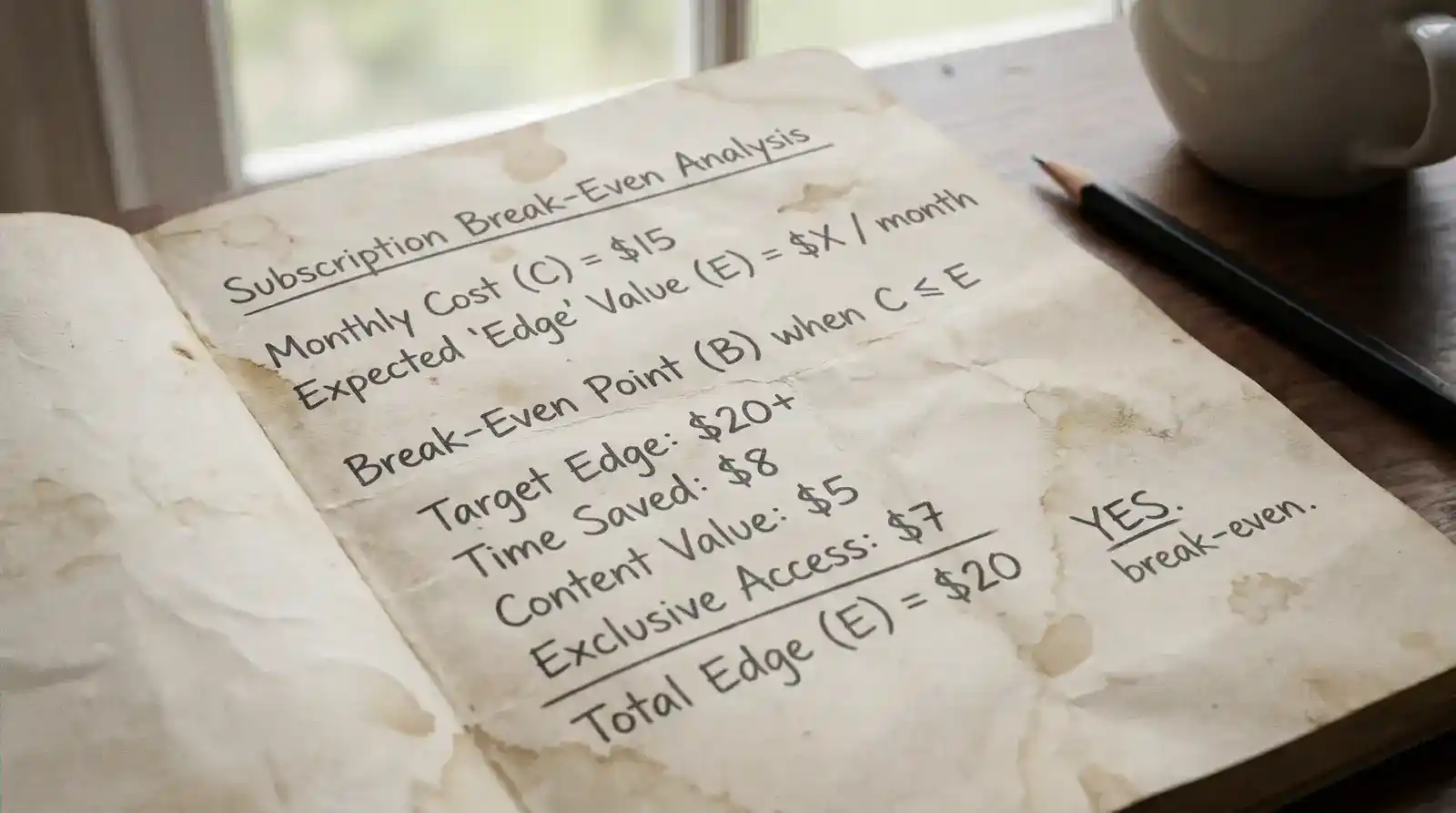
Before paying for any golf tipster service, run a simple cost-benefit calculation. Take the claimed monthly profit in points at the claimed average odds, apply the subscription cost per month, and calculate the net points profit after subscription costs. At a typical subscription cost of £30-50 per month, you need to be betting at stakes where 1 unit generates at least £5-10 in return for the subscription to represent good value. If you are betting at £5 per unit, a 20-point monthly profit generates £100 in returns — and the £40 monthly subscription represents 40% of your gross return.

The alternative is the DIY approach, which requires the initial time investment to learn the SG analytical framework but costs nothing in ongoing subscriptions and gives you full transparency about every selection you make. Nine years in, I generate my own selections entirely from publicly available data. The SG:T2G framework, course-fit analysis, and field comparison process are learnable skills — not proprietary knowledge reserved for professionals. A tipster service might accelerate your early learning curve, but the exit from that dependency is always toward building your own analytical capability.
For building your own analytical process that reduces dependence on external tipsters, the golf betting record keeping guide covers how to track your own selections systematically and measure your analytical edge independently over time.
What sample size of bets is needed to verify a golf tipster"s edge?
A minimum of 150 to 200 outright or each-way selections is needed before ROI figures become statistically meaningful at typical golf betting win rates. Below that sample size, a positive ROI result is compatible with chance — golf"s variance means a service can show strong apparent returns over 50 bets simply by hitting one or two large-priced winners. At 200+ bets, the confidence interval around the ROI estimate narrows enough to distinguish consistent edge from fortunate variance, though 500+ bets provides the strongest statistical confidence.
Are proofed golf tipster records independently audited in the UK?
Proofing in the UK tipster market is handled by third-party services such as Tipstrr, ProofItOut, and similar platforms that record tips in real time. These are commercial proofing services, not independent auditors in the financial sense — they record and settle tips but do not verify that the tips are being placed at the claimed odds. The quality of proofing varies between platforms. The strongest verification standard is live tips issued before an event with specific odds cited, settled against the actual opening or best-available price, with a continuous unedited record going back at least two full seasons.
This material was created by SwingEdge team.
