

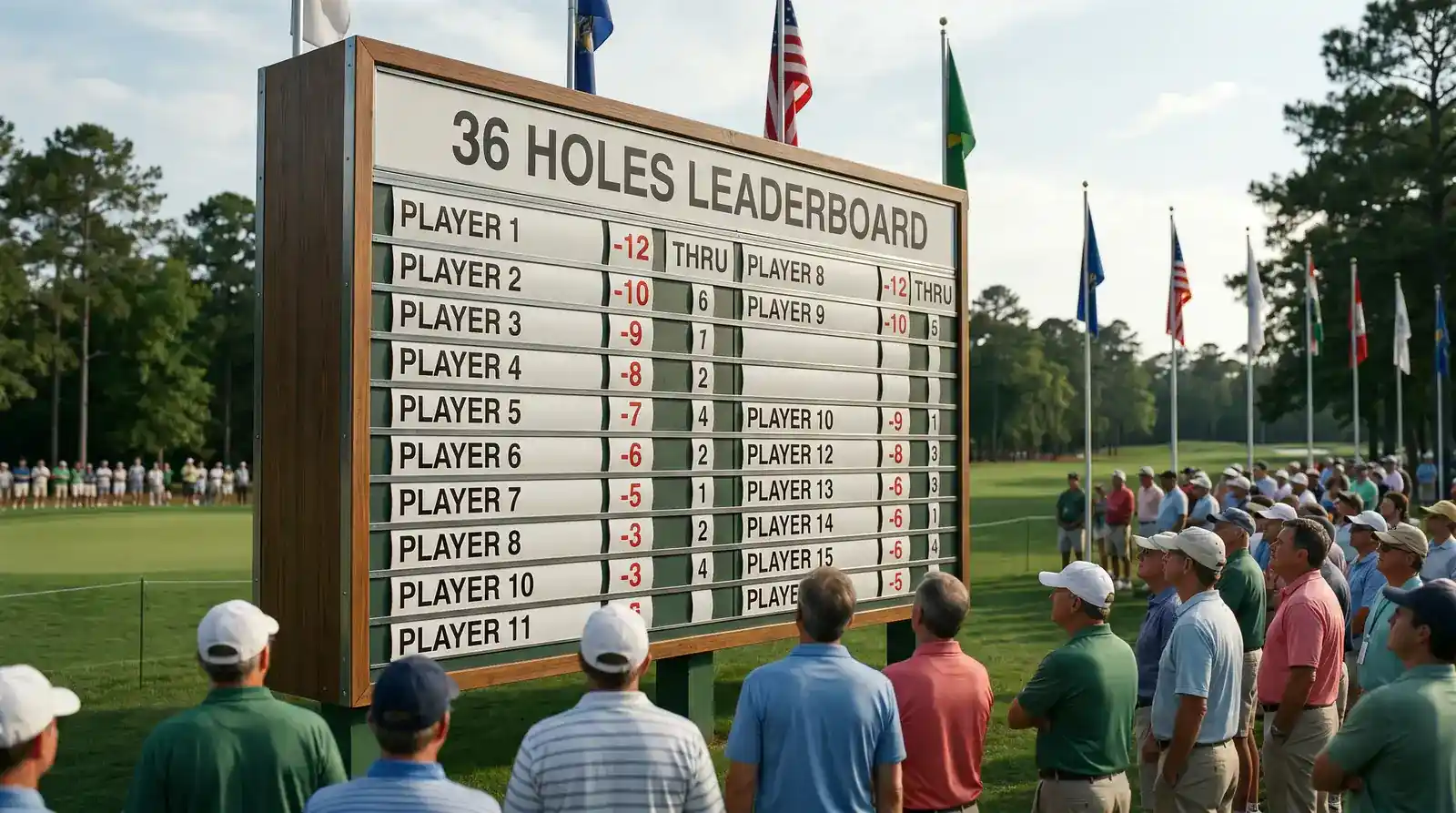
The cut market was the last major golf betting market I added to my systematic approach, and I regret not getting there sooner. I spent years focused on outright winners and top-finish markets — the big-headline bets — while the cut market sat there producing steady, lower-variance returns that compounded quietly over seasons. It is not glamorous. There is no 100/1 shot coming in to generate a story worth telling at the pub. But a bet that wins roughly 70% of the time with a modest edge, placed consistently over dozens of events, produces a better ROI trajectory than most punters achieve with outright selections.
How the Cut Market Works in Practice
In a standard PGA Tour or DP World Tour event, the cut is applied after 36 holes. The top 65 players and ties advance to the weekend; everyone else is eliminated. The “make or miss cut” market on UK bookmakers asks you to predict whether a specific player will be inside that line or outside it. Settlement is binary — make or miss — and typically settled immediately after the official cut declaration on Friday evening.
The simplicity of that binary outcome is what makes the cut market analytically tractable. You are not predicting a finishing position across 156 players over four rounds; you are predicting whether one player will be in the top 70% of a field after two rounds. That is a question that SG data answers more reliably than almost any other outcome in golf betting, because making the cut requires exactly the kind of consistent ball-striking that SG:T2G measures — not a hot putter for one round, not a lucky bounce, but sustained competent play across 36 holes.

SG as a Cut-Making Predictor
The statistical case for Strokes Gained as a cut predictor is strong. The players who most consistently make cuts are elite ball strikers — specifically, players with strong SG:T2G over their recent events. Putting variance, which makes outright prediction difficult, is largely irrelevant for cut-making prediction: you do not need to putt brilliantly to make a cut, you need to put yourself in enough birdie and par situations to stay near the number. That is a ball-striking outcome.
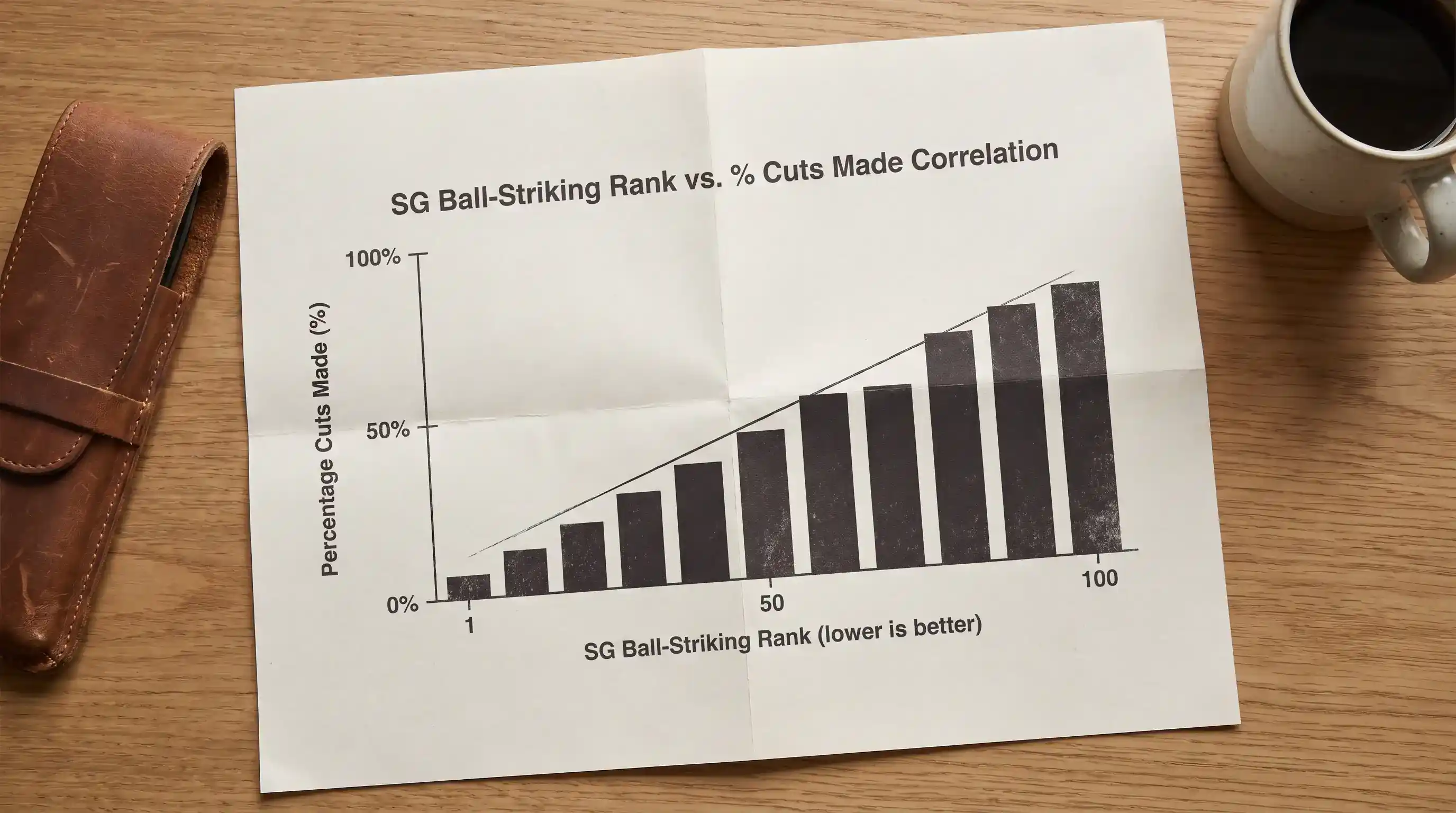
The players to monitor for cut-market betting are those with strong underlying SG:T2G data who are underperforming their metrics in recent finishing positions. A player who has missed two cuts in a row but whose SG:T2G in those events was solidly positive is a strong cut-market value selection — the market will have moved against them based on visible results, but the underlying data suggests their ball-striking competence is intact. Conversely, a player on a hot run of made cuts driven primarily by exceptional putting is a cut-market risk if their underlying approach play data is weak.

The “Drive for Show, Putt for Dough” maxim that dominated golf commentary for decades is statistically inverted when it comes to professional performance. The research from Columbia’s Mark Broadie demonstrated clearly that ball-striking — specifically Tee-to-Green performance — is more predictive week to week than putting. For cut-market betting, this is the analytical foundation: bet the ball-strikers at good prices; fade the putters who are overperforming their underlying metrics.
Building a Cut-Market Workflow
My process for cut-market betting is straightforward and takes under 20 minutes per event. First, I pull the SG:T2G data for the full field over their last 10 to 12 events, weight the most recent four events more heavily, and rank the field. Second, I identify players who rank in the top 40% of the field on that metric but who are priced at worse than evens to make the cut — which indicates the market has discounted their ball-striking form for other reasons (visible results, injury rumours, or simple public narrative). Third, I cross-reference with course history: a player with strong SG:T2G data who has made the cut 8 of 8 times at a specific venue is a more reliable cut selection than the same player’s data at a venue where they have no history.
The position sizing for cut markets in my system is conservative — typically half a unit — because the returns per bet are modest, and I am building a high-volume book of small edges. Twenty cut-market bets per season, each carrying a 3-5% edge, compounds into a meaningful ROI contributor without ever requiring the kind of outcome uncertainty that outright markets demand.

Identifying Overpriced Cut Candidates in the Market
The cut market regularly misprices players coming off missed cuts when the reason for the missed cut is statistically noisy. A player who missed a cut at a venue that historically produces poor results for their skill profile — say, a ball-striking-dominant player at a putting-premium course — is not necessarily a cut risk at the next event on a more neutral setup. The market treats the missed cut as a form signal and extends it to the following week; the SG data tells a different story.
Two categories of player are consistently overpriced to make cuts in UK golf betting markets. The first is elite players coming back from injury or illness who have played only one or two events since returning — the market is uncertain about their form, but if their SG:T2G in the warm-up events was healthy, the underlying competence is likely intact. The second category is players in the top 50 of the world ranking who are competing in a field significantly weaker than their usual tour — they may have reduced motivation and lower mental engagement, but their sheer quality makes a missed cut statistically unlikely.

The inverse also applies: players who are in the middle of a priority-category run on their tour — those who need to make cuts to keep their card — historically underperform their world ranking in cut-making frequency. The pressure of needing a specific outcome tends to produce the kind of tight, defensive play that generates bogeys on the scoring holes that matter most. This psychological variable is not captured in SG data, but it is observable from tour eligibility standings and is worth factoring in when assessing cut-market selections at the fringes of the field.
For the underlying SG methodology and how to interpret Tee-to-Green data versus putting data when assessing player form, the strokes gained golf betting guide covers the statistical framework in full.
How is the cut line determined in a typical PGA Tour event?
The standard PGA Tour cut is the top 65 players and ties after 36 holes. In practice, this means the precise cut score is not known until all second-round play is complete — it adjusts based on where the 65th player sits. Some events use a 10-shot rule that restricts the cut to players within 10 strokes of the leader, which can tighten the field in tournaments with low scoring. DP World Tour events use similar mechanisms but with field-size-specific cut rules. Always confirm the specific event"s cut format before placing.
Do bookmakers void cut bets if a tournament is reduced to 54 or 36 holes?
Settlement rules vary between UK bookmakers, but most will apply the cut result if a cut was declared before a tournament is shortened. If a tournament is reduced before a cut is officially made — for example, if storms lead to a 54-hole event being declared before 36 holes are completed — most operators void cut-market bets and return stakes. Check the specific terms with your bookmaker before placing, particularly for tournaments with weather-risk venues or in seasons with packed scheduling that might force shortened events.
This material was created by SwingEdge team.
